The SUV Brand Challenging Toyota and Nissan in the Middle East Is Coming to Nepal



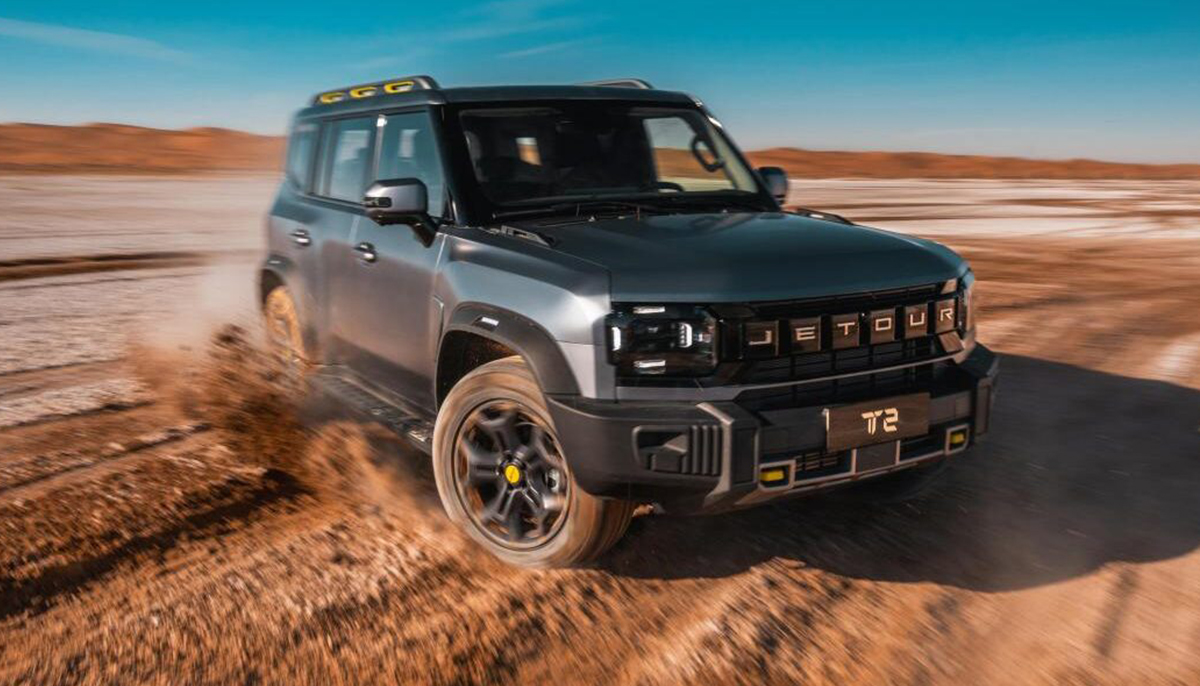
For decades, the Middle East SUV market has been dominated by established Japanese brands.
Toyota and Nissan have built decades of customer trust in the region, with their SUVs becoming symbols of reliability, durability and long-distance capability. But the landscape is beginning to change.
A new generation of Chinese automotive brands is challenging the traditional order, bringing advanced technology, bold designs and electrified powertrains into a segment that has historically been controlled by global giants. Among these emerging brands, one name has made particularly rapid progress - Jetour.

The Chinese SUV manufacturer has grown from a relatively new entrant into one of the fastest-growing automotive brands in the Middle East, gaining recognition in a market known for demanding SUV customers. Now, after establishing a strong international presence, Jetour is preparing to enter Nepal.
The brand will make its Nepal debut through Laxmi Motorhub under Laxmi Group at the upcoming NAIMA Nepal Mobility Expo 2026, bringing its SUV-focused lineup and hybrid technology to Nepali buyers.
From a New Chinese Brand to a Global SUV Player
Established in 2018 under Chery Holding Group, Jetour was created with a clear focus on SUVs built around travel, adventure and modern mobility.
Unlike traditional automakers that are gradually transitioning their existing lineups towards electrification, Jetour developed its product strategy around new-energy vehicles from the beginning.
The brand has focused on combining SUV practicality with modern technology, offering vehicles that blend rugged styling, premium interiors and electrified powertrains. This approach has helped Jetour expand rapidly across international markets.
In just seven years, Jetour has sold more than 2.2 million vehicles globally, making it one of the fastest-growing Chinese automotive brands. A major contributor to this success has been its T-Series SUV lineup, particularly the Jetour T2.
The T2 has surpassed 500,000 cumulative global sales within 33 months of its launch, with Jetour claiming it has become the fastest boxy SUV to reach the half-million sales milestone globally. The wider T-Series lineup crossed 700,000 cumulative sales as of May 2026, highlighting the growing popularity of Jetour’s adventure-oriented SUV philosophy.
The T2 has also performed strongly in international markets, leading the boxy SUV segment in nine countries, including the UAE, Qatar and Egypt. The model has received Car of the Year recognition in Angola and South Africa and won the Mild Adventure Category Championship at the 2026 South Africa Car of the Year awards.
The success of the T2 reflects Jetour’s broader strategy — combining the traditional appeal of SUVs with modern technology, electrification and lifestyle-focused design.
However, the brand’s biggest breakthrough has come in the Middle East.
Challenging Established SUV Players in the Middle East
The Middle East has always been a challenging market for new automotive brands.
SUV buyers in the region often look for vehicles that can handle long distances, extreme weather conditions and varied terrain. At the same time, brand reputation plays a major role, with established manufacturers enjoying decades of customer loyalty. Despite entering a highly competitive market, Jetour has managed to make significant progress.
In 2025, Jetour recorded more than 70,000 vehicle sales in the Middle East, achieving over 80% year-on-year growth. The performance made Jetour the No.1 Chinese automotive brand in the region.
By the end of 2025, Jetour had captured an 8.5% share of the Middle East SUV market, ranking third among all automotive brands behind Toyota and Nissan.
For a brand launched only seven years ago, securing a position among the region’s leading SUV manufacturers highlights the changing dynamics of the global automotive industry.
The SUVs Coming to Nepal
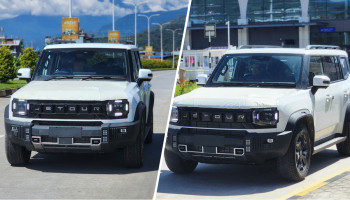
Jetour’s Nepal entry will be led by two plug-in hybrid SUVs — the T2 PHEV and T1 PHEV.
The Jetour T2 PHEV represents the brand’s adventure-oriented approach. Inspired by traditional off-road SUVs, the T2 features a boxy design, upright stance, high bonnet line and rugged styling elements. However, underneath its conventional SUV appearance is a modern plug-in hybrid system.
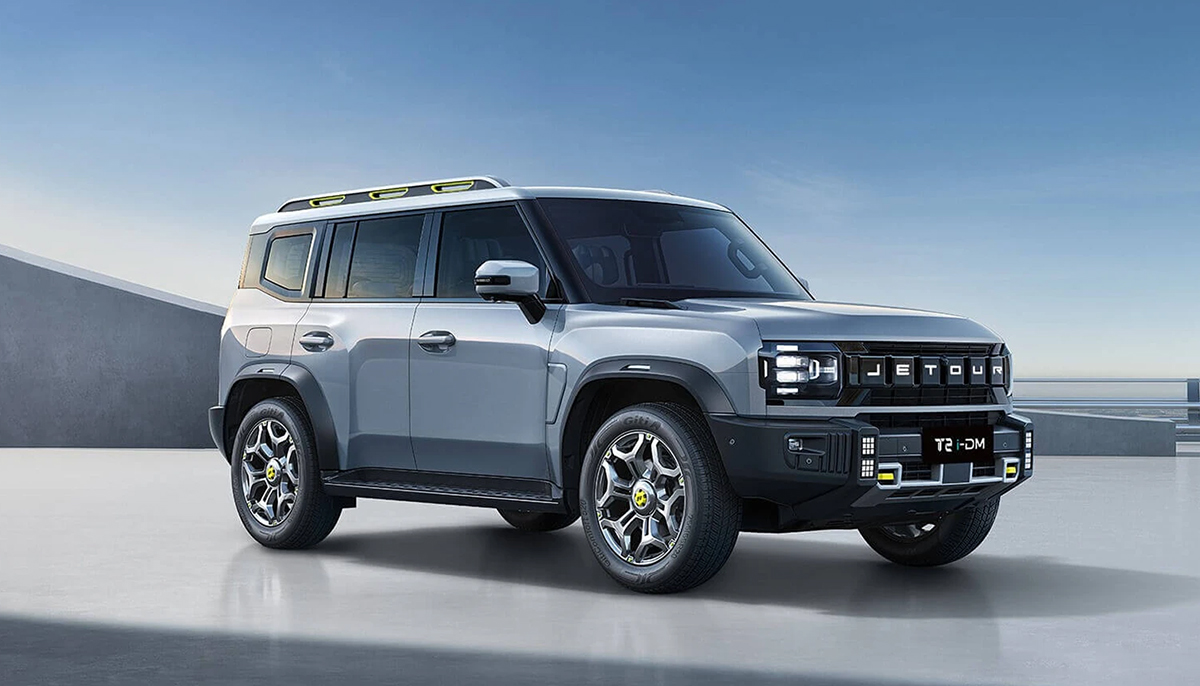
The T2 PHEV combines a 1.5-litre TGDI turbocharged petrol engine with a plug-in hybrid system and a 3-speed Dedicated Hybrid Transmission (DHT). The combined system produces 360 hp and 610 Nm of torque, enabling a 0-100 km/h sprint in around 7.5 seconds.
It uses an 18.4 kWh lithium iron phosphate (LFP) battery pack, offering up to 90 km of electric-only range under the NEDC cycle. Combined with the petrol engine, Jetour claims a total driving range of around 1,100 km. The SUV also supports fast charging, with the battery capable of charging from 30% to 80% in approximately 30 minutes.
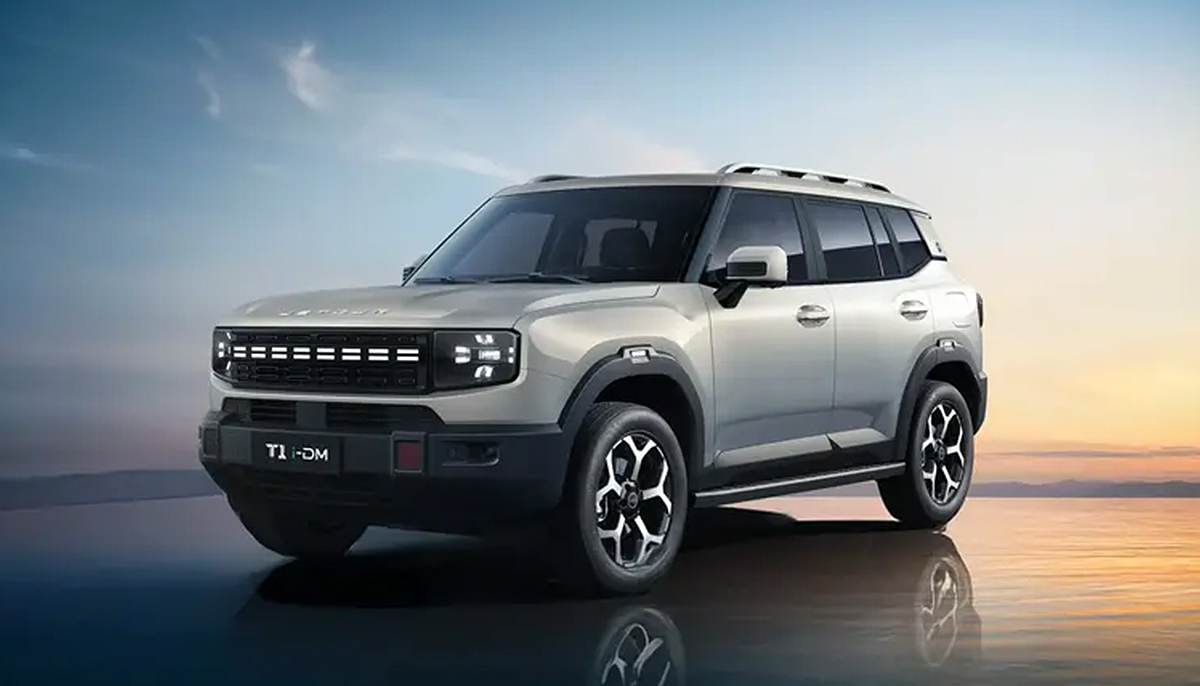
The smaller Jetour T1 PHEV follows a similar formula but targets buyers looking for a slightly more compact SUV. It uses the same 1.5-litre TGDI plug-in hybrid system, producing 335 hp and 530 Nm of torque.
With a larger 26.7 kWh LFP battery pack, the T1 offers around 117 km of electric-only range under WLTC testingand a claimed combined driving range of up to 1,200 km.
Both models represent Jetour’s approach to electrification — maintaining SUV capability and long-distance usability while adding electric driving efficiency.
Can Jetour Repeat Its Middle East Success in Nepal?
Jetour enters Nepal with something many new brands do not have — an established international success story. Its growth in the Middle East shows that newer Chinese manufacturers are capable of competing in markets where brand heritage has traditionally been a major advantage.
However, Nepal will present its own set of challenges. The biggest factor will be pricing, as the current policy environment does not provide the same level of support for hybrid vehicles compared to fully electric vehicles. This could potentially position Jetour’s plug-in hybrid SUVs at a higher price point than expected.
That said, with Laxmi Motorhub handling the brand’s entry into Nepal, factors such as after-sales support, spare parts availability and customer confidence could be strong advantages for Jetour.
If positioned competitively, the brand has the potential to challenge established SUV players in Nepal, much like it has done in one of the world’s most competitive SUV markets.